Key Takeaways
- Duty level reflects how many open-close cycles a drawer can handle and the quality of its internal components. It does not indicate physical size.
- Light Duty drawers are tested to 500,000 cycles with a 1-year warranty. They deliver the lowest upfront cost for intermittent cash use.
- Heavy Duty drawers are tested to 4,000,000+ cycles with a 5-year warranty. They’re built for high-traffic environments where reliability is non-negotiable.
- The wrong duty level drives early breakdowns, cashier frustration, and costly POS downtime. Match the drawer to actual and peak cycle demand.
- Look beyond cycle life. Confirm POS compatibility, security features, and total cost of ownership before you buy.
The cash drawer is a mission-critical piece of point-of-sale (POS) hardware. It is more than a metal box under the counter. It secures money, speeds change-making, and keeps lines moving in brick-and-mortar stores that serve local communities day after day. Choose the wrong drawer, and you’ll feel it quickly: premature failure, checkout disruptions, and unplanned replacement costs that spread ripples across operations.
Duty level is the durability class of a cash drawer, and matching that level to your traffic is the simplest way to protect uptime and cash control. When it comes to Light Duty vs. Heavy Duty cash drawers, there are several key differences, and learning about these is key to choosing the right tool for your business.
What Does “Duty Level” Mean for a Cash Drawer?
Duty level is the durability classification of a cash drawer. It’s determined by the cycle life it’s built to handle and the quality of internal components that move and secure the drawer each time it opens and closes. One cycle equals one complete opening and closing action. Cycle life offers the most practical benchmark for predicting long-term fit in real-world lanes.
Durability is not about physical size. A compact drawer can be heavy duty if the inside is engineered for it. The suspension system (roller wheels versus steel ball-bearing slides), latch design, case construction, and lock mechanism all contribute to the rating. Stronger slides distribute weight and motion more evenly, fatigue-resistant latches maintain tension over time, and sturdy, well-braced cases prevent flexing that can misalign parts. Together, these elements determine how many times a drawer will perform consistently before components wear.
Light Duty Cash Drawers
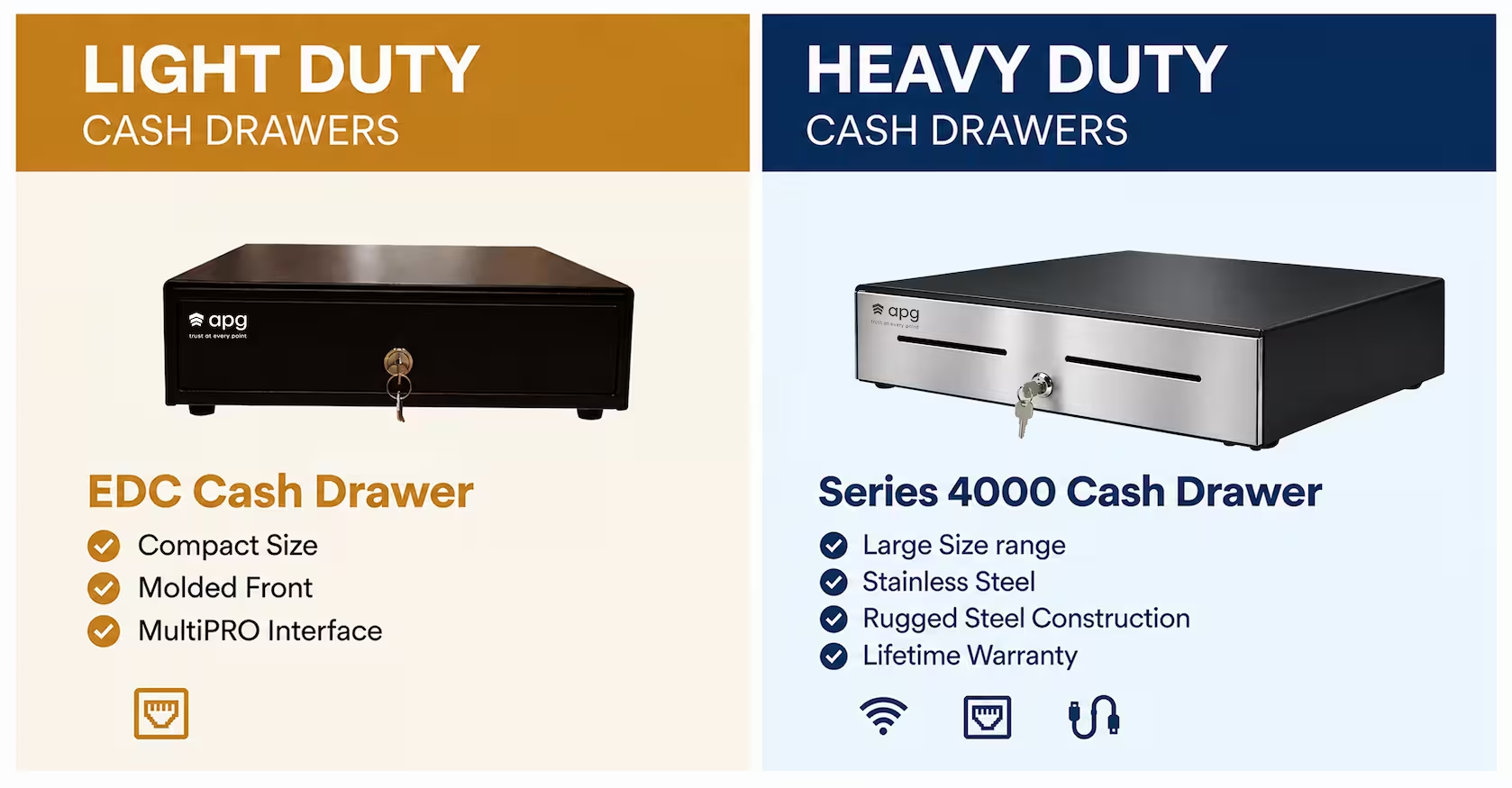
Light Duty cash drawers are built for lower-volume cash environments. Light Duty does not mean low quality; it means the drawer is matched to a lower-frequency use case where cycles accumulate slowly over months and years. In the apg® lineup, Light Duty models are tested to 500,000 cycles and include a 1-year warranty, giving small retailers and pop-up operations an affordable, reliable solution without overbuying.
The key advantage is the lowest upfront cost with dependable cash control. Roller wheel suspension and steel or mixed-material cases keep the mechanism simple, serviceable, and cost-effective. For merchants who take occasional cash, such as boutique counters with mostly card payments or weekend event stalls, a Light Duty drawer returns strong value and helps conserve capital for other operations.
Explore the current Light Duty lineup here: Light Duty Cash Drawers.
Best Environments for Light Duty Cash Drawers
The best environments for Light Duty cash drawers include:
- Pop-up shops
- Seasonal booths
- Food trucks
- Mobile checkout stations
- Kiosks
- Training lanes
These tend to share one common trait: intermittent, lower-frequency cash use that does not push the drawer to its limits daily.
Heavy Duty Cash Drawers
A Heavy Duty cash drawer is engineered for lanes where reliability and long service life are non-negotiable. These drawers use industrial-grade steel ball-bearing slides for smooth, consistent movement, a fatigue-resistant latch mechanism that holds tension across millions of openings, reinforced case components that resist flex, and multi-function lock assemblies to secure tills over long periods of time.
Heavy Duty models in the apg® portfolio are tested to endure more than 4,000,000 cycles and are backed by a 5-year warranty. That combination of high cycle life and longer coverage reflects the expectation that these drawers will run continuously in demanding lanes without drifting out of alignment or compromising security. When lines stack up, the drawer must open and close consistently with no surprises.
While the upfront cost is higher than Light Duty alternatives, the total cost of ownership in a high-volume setting drops. Replacement risk falls significantly, along with the downtime and disruption that come with it.
Explore the current Heavy Duty lineup here: Heavy Duty Cash Drawers.
Best Environments for Heavy Duty Cash Drawers
High-traffic environments share high cycle demand, long operating hours, and often greater cash exposure. The best environments for Heavy Duty cash drawers include:
- Grocery stores
- Convenience stores
- Quick-serve restaurants and drive-thrus
- Bars and nightclubs
- Hospitality counters
- Cannabis dispensaries
- Banking and government counters
Each of these factors justifies the investment in heavy-duty construction.
Light Duty vs. Heavy Duty Cash Drawers: Side-by-Side Comparison
| Feature | Light Duty | Heavy Duty |
|---|---|---|
| Cycle Rating | Up to 500,000 cycles | 4,000,000+ cycles |
| Suspension System | Roller wheels | Industrial-grade steel ball bearings |
| Case Construction | Steel or mixed-material | Sturdy, heavy-gauge steel |
| Latch Design | Standard latch | Fatigue-resistant latch |
| Best-Fit Environments | Pop-ups, kiosks, food trucks | Grocery, QSR, convenience, bars |
| Typical Warranty | 1 Year | 5 Years |
| Cost Profile | Lowest upfront cost | Higher upfront, lowest long-term risk |
| apg® Models | Arlo, ECD | Series 4000, 460MOD04 |
Cycle life is a strong starting point, but it’s only one piece. Confirm compatibility and security features, and run the math on total cost of ownership, making sure that you factor in downtime, replacement labor, and training disruptions.
How to Choose Between Light Duty and Heavy Duty Cash Drawers
The wrong placement changes the equation. Put a Light Duty drawer in a high-volume lane, and the mechanisms see much more strain than they’re designed to withstand. That mismatch leads to earlier mechanical failure, service interruptions, and cashier frustration when the till sticks or fails to latch.
Estimate Your Annual Cycle Count
Use a simple formula to estimate drawer cycles: (daily cash transactions + non-sale opens like cash drops, paid-outs, till changes, and manager checks) × operating days per year = estimated annual cycles. For example, a counter that opens 50 times per day for 360 operating days reaches 18,000 cycles per year. That sits well within light-duty territory for many years.
High-traffic lanes tell a different story. A grocery checkout that opens 300 times per day logs about 108,000 cycles per year. That rate consumes a 500,000-cycle light-duty rating in roughly four to five years, and peaks or extended hours can push wear much faster. Busy stores often see 500 or more daily openings, which can bring a Light Duty drawer to end of life in about two to three years.
Consider Peak-Hour Pressure, Not Just Daily Averages
Averages hide the stress that breaks equipment. A drive-thru lane during lunch or a convenience store on Friday night compresses hundreds of open-close actions into short windows. Drawers built with ball-bearing slides and fatigue-resistant latches handle that concentrated load much better over time. So, plan for what’s next, not just what’s now. If you expect longer hours, added locations, or community events that spike foot traffic, choosing Heavy Duty often prevents an early replacement tomorrow.
Confirm POS Compatibility
A durable drawer only delivers value when it connects cleanly to your POS. The most common interface is printer-driven via a drawer-kick cable: the receipt printer receives a signal from the POS software and triggers the drawer to open. USB options are also available for some environments and workflows. Before installation, confirm cable type, printer voltage, and POS software settings so the lane runs from day one.
Factor in Total Cost of Ownership
The lowest purchase price isn’t always the lowest long-term cost. A Light Duty drawer placed in a high-volume lane may need replacing every 12–18 months, while a Heavy Duty drawer in the same lane can run for five or more years. Every replacement brings installation time, associate retraining, and checkout downtime that erodes sales and service quality.
Downtime adds up quickly. Expect lost transactions, longer lines, and customers who walk away. Even short outages can cost hundreds of dollars per hour for small retailers, and much more in larger operations.
Frequently Asked Questions (FAQs)
What is the difference between a Light Duty and Heavy Duty cash drawer?
The core difference is cycle life and internal construction. Light Duty drawers are rated for around 500,000 open-close cycles and use roller wheel suspension, making them ideal for low-volume environments like pop-ups and kiosks. A Heavy Duty cash drawer is tested to endure more than 4,000,000 cycles, features industrial-grade steel ball-bearing slides, and is built for demanding environments like grocery stores, QSR lanes, and convenience stores.
Can a Light Duty cash drawer be used in a busy retail store?
It may function initially, but it’s not the right long-term fit for sustained high-volume use. Placing a Light Duty drawer in a busy lane will likely push it beyond its cycle rating quickly, resulting in mechanical failure, checkout delays, and higher total replacement costs. A Heavy Duty drawer is the more reliable and cost-effective choice for active retail environments.
How do I know if I need a Heavy Duty cash drawer?
Start by estimating daily drawer openings, including cash transactions and non-sale opens like cash drops and till changes. Then multiply by operating days to get an annual cycle estimate. If that number approaches or exceeds 500,000 cycles over the expected life, a Heavy Duty drawer is the safer investment. High-traffic environments like grocery, convenience, and QSR almost always require Heavy Duty construction.
Are Heavy Duty cash drawers worth the extra cost?
For high-volume environments, yes. The higher upfront cost is offset by a significantly lower replacement risk and longer service life. A Heavy Duty drawer in a busy grocery or convenience lane can last five or more years, while a Light Duty drawer in the same setting may need replacing within 12–18 months.
What is the cycle life of a cash drawer?
Cycle life refers to the total number of open-close operations a cash drawer is rated to handle before components may begin to wear. One cycle equals one complete opening and closing action. Light Duty models from apg® are rated to 500,000 cycles, while Heavy Duty models are tested to more than 4,000,000 cycles.